

I. Transmission Characteristics and Special Requirements of Lawn Mowers
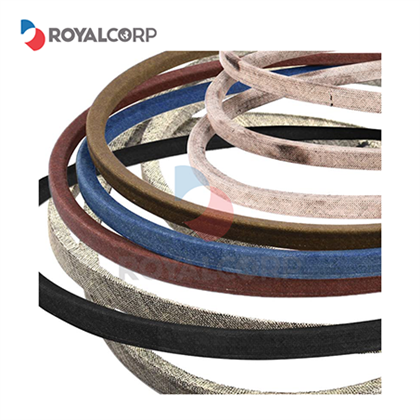

Lawn mowers operate in relatively unique environments, placing high demands on their internal drive belts:
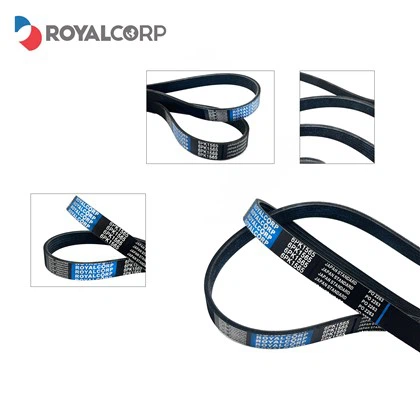

- Variable outdoor conditions: Exposure to humidity, temperature fluctuations, grass clippings and dust
- Intermittent impact loads: Sudden load changes when encountering thick grass or obstacles
- Compact space constraints: Transmission layout strictly limited by equipment dimensions
- Safety and noise reduction requirements: High standards for noise levels and safety in domestic settings
- Maintenance accessibility: Limited capability for end-users to perform maintenance themselves

II. Performance Comparison of Flat Belts and V-Belts in Lawnmower Applications
Characteristics of Traditional V-Belts

Advantages:
· A mature solution with relatively low cost
· High lateral friction, suitable for drives with small centre distances
· High market penetration with readily available replacement parts
Limitations:
· Typical transmission efficiency of 90-94%, resulting in higher energy loss
· Uneven load distribution when multiple belts are used due to length inconsistencies
· Thicker cross-section design occupies more space
· Grass clippings easily embed in grooves, accelerating wear
Technical Advantages of Modern Flat Belts

Structural Innovation:
· Multi-layer composite construction (polyester core + elastomer cover)
· Thin profile design, 40-60% thinner than V-belts
· Seamless or precision-joined construction for smooth operation
Performance characteristics:
· Transmission efficiency reaches 96-98%, delivering significant energy savings
· Uniform stress distribution extends service life by 30-50%
· Outstanding resistance to moisture and contamination
· Operating noise reduced by 4-7 decibels for enhanced user experience
III. Application Segmentation: Which equipment suits flat belts best?
1. Domestic Rotary Lawnmowers (Flat Belts Recommended)
Power Range: 3.5–7 horsepower
Advantages: Flat belts' quiet operation is particularly crucial in residential settings; high-efficiency transmission delivers superior cutting performance at equivalent power while reducing entanglement and slippage issues
2. Commercial Large Lawnmowers (Select Based on Specification)
Power Range: 10-25 horsepower
High-load models: V-belts may prove more economical, particularly in established designs
New model designs: Flat belts offer distinct advantages in compactness and efficiency, especially for hybrid or battery-powered models
3. Zero-turn mowers (strongly recommend flat belts)
Key requirements: Precise speed control and responsiveness
Flat belt advantages: Enhanced transmission accuracy and faster response times improve handling experience
Maintenance Convenience: Flat belt systems offer simpler tension adjustment, reducing professional servicing requirements
IV. Economic Analysis: Full Lifecycle Cost Comparison
|
Cost Item |
Traditional V-belt System |
Modern Flat Belt System |
Long-term Impact |
|
Initial Purchase Cost |
Lower |
15-30% higher |
Flat belt premium recouped within 12-18 months |
|
Energy Consumption Cost |
Standard |
5-8% reduction |
Significant annual savings for commercial equipment |
|
Replacement Frequency |
Every 1-2 years |
Every 2-4 years |
Flat belt maintenance costs reduced by over 40% |
|
Downtime |
Longer (requires professional adjustment) |
Shorter (simple installation) |
Enhanced equipment availability |
|
Performance Consistency |
Significant decline with wear |
Stable throughout entire lifecycle |
Maintains cutting quality |
V. Environmental Adaptability and Durability Test Data
Based on collaborative testing with major North American and European lawnmower manufacturers:
1. Moisture Resistance:
V-belts exhibit 8-12% efficiency reduction in humid conditions
Flat belts feature specialised coating, maintaining only 2-4% efficiency loss in damp environments
2.Contamination Resistance:
V-belt systems show over 15% increased slippage after grass clippings accumulation
Flat belts' smooth surface minimises debris adhesion, limiting slippage increase to under 5%
3. Temperature Adaptability:
Both belt types perform well within -10°C to 50°C
Flat belts demonstrate superior dimensional stability at extreme temperatures (elongation <0.3%)
VI. Professional Selection Guide
Key Parameters for Flat Belt Selection:
- Tensile layer material (polyester, aramid, etc.)
- Covering layer properties (UV resistance, moisture resistance, antistatic)
- Dimensional accuracy and interface processes
- Minimum pulley diameter compatibility
Flat Belt Installation and Maintenance Essentials:
- Ensure pulley alignment precision (higher than V-belt requirements)
- Employ specialised tools for tension measurement
- Regular cleaning but avoid strong chemical solvents
- Prevent twisting and heavy pressure during storage