
Why Choose Us?
Rich experience: We are an integrated company with scientific research, production and trading. Established in 2001. With 20 years history and experience, take the advantage and resource of our factories, therefor allowed us to develop and service domestic and overseas market well.
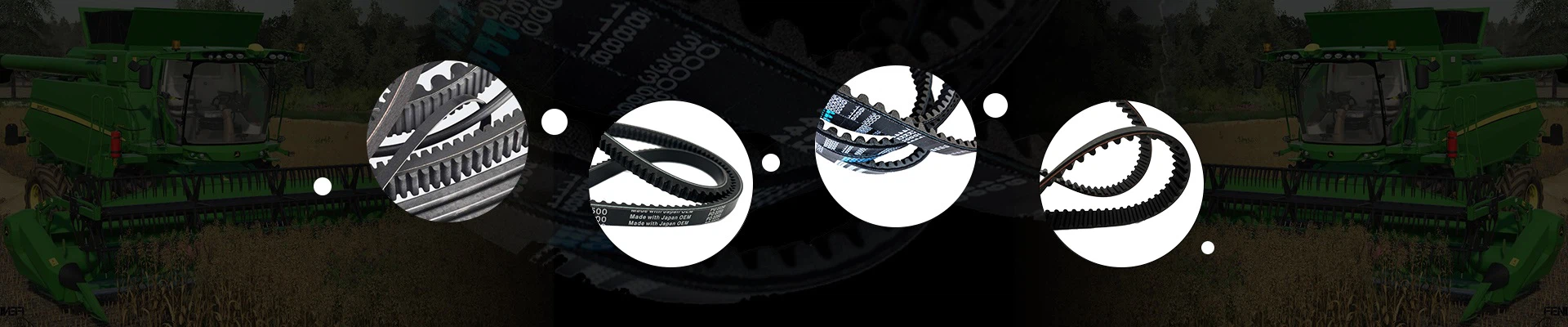
Complete range of products: We professional produce and supplier all kinds of power transmission V-belts in cogged and classical version, rubber timing belt, pu timing belt , variable speed v belt, conveyor belt, applicate on vehicle, truck, tractor, passenger cars, scooters, light and heavy duty industrial machines, agricultural harvester machines, textile, food industrial machines, elevator, furniture , logistic transportation facility, hand tools, sport equipment, bank ATM and more.
High quality: We strictly execute ISO9001:2000 and ISO/TS16949 quality system. Assigned person in full-time to inspect during all the production procedure, never allowed unqualified semi-finished products were flow to the next process, we always strive towards 100% qualification rate of the products.
High quality service: Continues to expand and improve our group, to maximize the profit and value of customers and partners by providing first-class products and service, sincerely hope you can advise us more valuable comments.
Polyurethane Belts
Polyurethane (PU) is a synthetic polymer. All of the PU in our belts is thermoplastic, also called TPU, meaning that it can be melted and reshaped virtually indefinitely. PU is a resilient material, designed to last longer on belting than PVC or rubber. PU is much more resistant to abrasion and, in most cases, has a better chemical resistance. PU also has a high resistance to cutting or tearing. In many cases a damaged belt will continue to perform well. This makes PU particularly suited for applications with fats and oils, where product is cut on the belt, and transferring sharp parts.
-

Cookie Belts
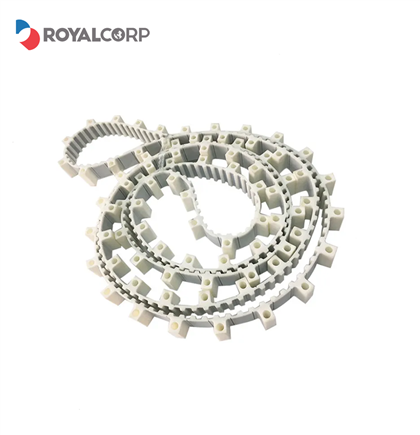
ROYALCORP’s PU Belt for Cookie Packing Machines — engineered for precision and durability.Our high-performance, truly endless PU timing/synchronous belts feature integrally moulded hook-like cleats, Add to Inquiry -
MBO Folding Machine Parts 0106929 2425-50-1 Yellow PU Fla...
MBO Folding Machine Parts 0106929 Belt size :2425-50-1mm Add to Inquiry -
Flat Timing Belts
Poly flat beltThe Poly flat belt is suitable for heavy duty lifting applications. It is also provided with a reinforced reinforcement conferring a very great constant stiffness and little elongation Add to Inquiry -
Timing Belt With Cleat
Timing belts with cleat enable innovative design solutions for dividing, stepping, and positioning. They are made of abrasion-resistant polyurethane. Belt pushers facilitate controlled feeding and Add to Inquiry -
Multi-groove Belt / Meat Slicer Belt With Multi-Wedge Bel...
Megarib multi v rib belts are molded endless with thermoset PU and high strength stable polyester (Kevlar on request).Designed for high speed, high ratio drives, Megarib belts are manufactured in H,J Add to Inquiry -
NFT T5-1775-25+5.5mm Wear-Resistant Brown Coating Rubber ...
Meat milling belt are designed for Sausage Feeders or meat milling machine /Sausage Cutting Machines. Tooth profiles include T5, T9 and T10.Meat milling machine belt usually consist of silicone body Add to Inquiry -
T10-3600-50mm P3-3600-50-3mm PU Powerless Treadmill Belts
Powerless Treadmill Belt Size:P3-3600-50mmT10-3600-50mm Add to Inquiry -
Custom PU Timing Belts Cleats For Chewing Gum Vending Mac...
The cleats are made of the same PU material as the timing belts themselves. This makes it possible to make the best connection with the belt by using a chemical weld, this method guarantees a very Add to Inquiry -
PU Haul Off Puller Belts
Haul-offs are pulley-driven parallel belts that contact opposite sides of in-process products, usually by means of rollers exerting suitable pressure for the belts to grip and haul them, with the Add to Inquiry -
C60 / C70 Type Coated Timing Belt For Carding Machine
We are supplying the best quality belts for Rieter C70 carding machine, all of the material including the PU and steel cord were imported , to insure the quality of the products.The high-grade PU Add to Inquiry -
LC361 363 LC333 LC636 Toothed Type Endless Carding Machin...
We are supplying the best quality belts for LMW LC333 carding machine, all of the material including the PU and steel cord were imported , to insure the quality of the products.The high-grade PU Add to Inquiry -
Carding Machine Belts C50/C51 Type
The product is featured by excellent performance and reliable quality. It is antibacterial, which can prevent cross-contamination in certain applications.The power transmission efficiency will not be Add to Inquiry



Key Benefits of Polyurethane Belts
Superior resistance
These belts exhibit remarkable resistance to water, oil, and grease, ensuring longevity and reliability in challenging environments.
Temperature tolerance
Depending on the specific product, some polyurethane belts can withstand exceptionally high temperatures, often enhanced by the addition of materials, preventing material degradation.
Durable against wear
Polyurethane's inherent abrasion and impact resistance make these belts highly durable, reducing maintenance and replacement costs.
Flexibility and elasticity
The material's flexibility and elasticity enable precise synchronization and smooth motion in various applications, enhancing operational efficiency and performance.
PVC VS Polyurethane Belts: What's the Difference
01/
Composition and Design
PVC stands for polyvinyl chloride, which is a kind of plastic. A typical PVC belt has a plastic surface with a synthetic canvas inside, which is usually made of polyester or nylon. Most PVC belts have ridges or teeth on the service side to help grip items on the belt.
Polyurethane belts, on the other hand, have a smooth polyurethane surface with tension members on the inside. A nylon fabric tooth facing is usually on the back.
02/
Oil Resistance
Probably the most major difference between PVC and polyurethane belts is that the latter holds up much better against grease, oil, and solvents. If your new conveyor system will handle meat or fried foods, you'll definitely want to choose either a polyurethane belt or a PVC belt with added protective coatings to help it resist all types of oil.
03/
Temperature Resistance
Both types of belts can handle a moderate amount of heat and cold. However, polyurethane belts can handle more extreme temperatures. If you'll be producing very hot or cold products, you may want to stay away from PVC belts. However, PVC belts work perfectly fine for most other situations.
04/
Ease of Cleaning
Cleaning is a category where both types of belts are pretty much equal. As long as you use your belts as directed and use a cleaner approved by your belt supplier, you should have no problems keeping your belts sanitary and bacteria-free.
The Advantages of Polyurethane Belt Material
Below are some of the benefits and advantages of polyurethane:
01.
Abrasion resistance
Polyurethanes are the perfect choice for applications against severe wear regardless of low temperature. For some decades now, they have been the most used materials for environments that are highly abrasive owing to their super ability to resist abrasion. No other form of elastomers, metals, and plastics has a better abrasion resistance than polyurethanes. Their abrasion resistance ability is rated to be 10 times better than what other materials can provide.
02.
Oil and chemical resistance
Like their abrasion resistance ability, the properties of polyurethane materials are highly capable of resisting oil and chemicals. This enables them to maintain stability (with minimal swelling) in water or oil etc. If you are looking for elastomer materials to use in subsea, then polyurethanes should be your ideal choice.
03.
Affordable manufacturing process
Productions such as prototypes as well as one time products or one-off parts are often manufactured using polyurethanes.
04.
Polyurethane resilience
Resilience is generally a product of hardness. Polyurethanes are the perfect choice for elastomer applications that can absorb shock. They have a high vibration frequency or outstanding ability for quick recovery. Their remarkable resilience ensures polyurethanes are very tough materials.
Polyurethane Belt Tooth Profiles
Depending on the desired application and environment, polyurethane belt teeth can be arranged in several different ways. The first is trapezoidal, while more modern belts use curvilinear tooth profiles.
01
Trapezoidal belts
Trapezoidal teeth are extremely effective at transmitting forces. However, at higher levels of torque or speed, teeth of this harsher, more blunt shape tend to wear down fast.
02
Curvilinear belts
With a smoother and more rounded tooth shape, curvilinear teeth reduce the risk of tension loss, and alleviate the high concentration of force trapezoidal teeth experience.
Teeth of this profile are likely to suffer from a greater amount of play between the teeth of the belt and the grooves of the pulleys. Referred to as "backlash", this difficulty usually results in less accurate positioning of the belt, and potentially decreased performance.
03
Modified curvilinear belts
Modified curvilinear belts seek to combine the strengths of both trapezoidal and curvilinear tooth profiles. With a shallower tooth depth and steeper sides, these belts are able to effectively transmit forces of higher speed and torque without sacrificing on durability. Accordingly, modified curvilinear belts are often a primary choice for demanding industrial applications.

Considerations When Choosing Polyurethane Belt
The various considerations when selecting a polyurethane belt include:
Material choices
Clearly seen, there are many different materials used in polyurethane belts due to their own different specifications to which they can handle certain circumstances. As already mentioned earlier, the different types of materials for polyurethane belts include urethane, neoprene, rubber, fabric etc. Each material has its own unique properties that make it the most suitable for a particular application.
Dimensions and speed
Apart from the type of material, there are also some characteristics that must be considered when opting for a polyurethane belt. These characteristics will influence the smooth operation of the equipment. These characteristics are listed below.
Belt width
Belt width deals with the plausible amount of tracking force of the belt. Wider polyurethane belts result in greater tracking forces.
Belt length
Shorter belts have greater tracking forces because of the connection that is between tensile cords and belt molds.
Pulley diameter
Small-sized pulleys create greater tracking forces. The diameter of the pulley must be greater than that of the belt.
Belt installation tension
Due to the impact of various loads of torque gathered by belt tracking, the polyurethane belt's magnitude of belt installation tension does matter.
Functionality
The function of the polyurethane belt depends on where it is going to be used. Not every material is capable of handling the requirements for all industries. Thus there is a need to conform to the application in selecting a polyurethane belt.
Design
This refers to choosing a standard design or custom design of a polyurethane belt. The design of the polyurethane belt involves questions about the amount of precision required.
Maintenance Tips for Polyurethane Belt
The primary goal for polyurethane belt maintenance program is to make sure all belts are installed properly and are running every motor at peak efficiency. The other goal is to do everything possible to extend the life of your polyurethane belts.
To get started, you'll need to conduct an audit of every motor in the facility, their location and purpose. Then look at each for some basic problems. First, make sure all of the right belts are installed. It may sound simple, but if it was ever common practice at your plant to replace belts with anything available, this is an immediate fix you can easily identify. When conducting your initial assessment, make sure every motor has the right belt installed for that application. Also check to make sure pulleys are in alignment and all belts are properly tensioned.
Common operating problems for belt-driven equipment include improper tension and alignment. The worn sheaves that result from these problems will reduce system efficiency, while adding to maintenance costs. When installed properly, polyurethane beltdrives can run at a peak efficiency of 95% or higher, but efficiency can deteriorate by as much as 5% due to slippage if the belt is not periodically checked.
If a belt is not tensioned properly, or is too loose or too tight, it can lead to inefficient power transmission, belt wear, belt failure and sometimes even premature motor failure. A polyurethane beltthat is over-tensioned can reduce the bearing life of the motor and is one of the leading causes of polyurethane beltfailure. To combat tensioning problems, your maintenance shop should stock an arsenal of tools including a polyurethane belttension checker to measure polyurethane beltdeflection and tension and a belt frequency meter to find the natural vibration frequency of a belt strand so you can closely monitor belt tension. The device also calculates the corresponding belt tension.
Safety should be the top priority when installing, maintaining or replacing polyurethane belts on electric motor drives. There is always the potential for injuries from sharp objects, extreme temperatures, high-speed abrasions, pinch points, confined spaces, unexpected movement and blunt-force injuries from excessive force or uncontrolled release of belt tension. Other hazards include unbalanced loads, airborne objects, inadequately secured pulleys and loose bushings and screws. You can avoid some of these hazards in well-organized, well-lit work area with little clutter. Before doing any inspection or maintenance on belt drives, turn equipment off and lock out the power source.
Before replacing polyurethane belts, first confirm that the replacements are the correct size and the belt is the right match for the application. Belts to be installed on the same motor should be from the same manufacturer. Belts from different manufacturers may vary, with different stretch characteristics and coefficients of friction. Overloading will cause rapid wear and reduced belt life.
Our Factory
We are an integrated company with scientific research, production and trading. Established in 2001. With 20 years history and experience, take the advantage and resource of our factories, therefor allowed us to develop and service domestic and overseas market well. Our company located in the scenic Sanmen Bay, near to YONGTAIWEN and SHANGSAN highway, high-speed railway through Shanghai, Hangzhou, Ningbo and Wenzhou, the transportation is very convenient.

Our Certificate
We strictly execute ISO9001:2000 and ISO/TS16949 quality system. Assigned person in full-time to inspect during all the production procedure, never allowed unqualified semi-finished products were flow to the next process, we always strive towards 100% qualification rate of the products. From raw material purchasing to products delivering, we have complete inspection and testing equipment, and build a comprehensive monitoring system.


FAQ
As one of the most professional polyurethane belt manufacturers and suppliers in China, we're featured by good service and low price. Please rest assured to buy or wholesale high quality polyurethane belt for sale here from our factory. Contact us for customized service.
Polyurethane Open End Synchronous Belts, Adjustable Link V Belts, Polyurethane V Belts and Round Belts