
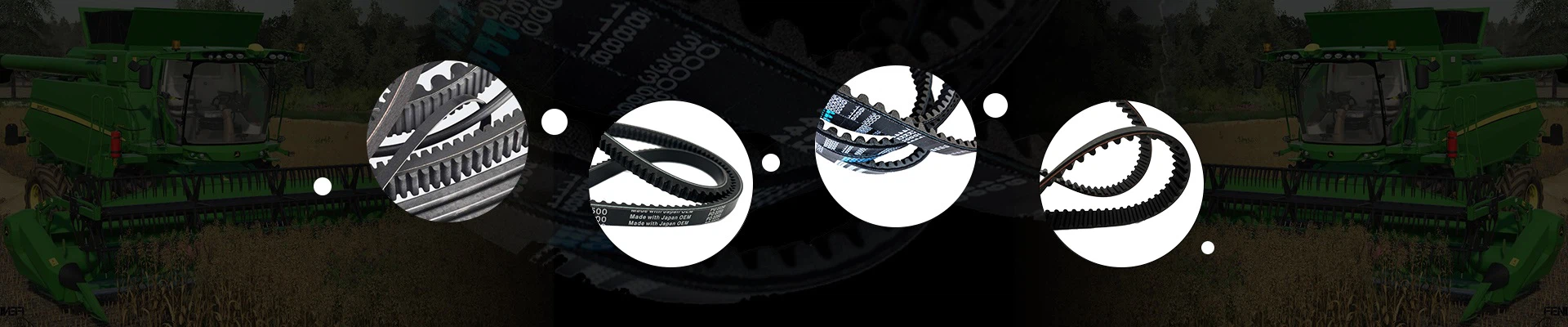
Polyester conveyor belts, also known as EP conveyor belts, wear-resistant conveyor belts, automated conveyor belts, and cement conveyor belts, have high belt modulus, low elongation during use, good heat stability, and impact resistance, making them suitable for conveying materials over medium to long distances, under high load, and at high speeds. Polyester conveyor belts (EP conveyor belts) are widely used in industries such as coal, mining, ports, metallurgy, power, and chemicals for material transportation.

According to the performance of the cover rubber, they are divided into cold-resistant, acid-resistant, alkali-resistant, oil-resistant, and wear-resistant types. Based on different working environments, they can be categorized as rubber conveyor belts (including standard type, heat-resistant type, flame-retardant type, scorch-resistant type, acid-alkali-resistant type, oil-resistant type), heat-resistant conveyor belts, cold-resistant conveyor belts, acid-alkali-resistant conveyor belts, and oil-resistant conveyor belts. Among them, the standard conveyor belt has a minimum top cover thickness of 3.0 mm and a minimum bottom cover thickness of 1.5 mm; heat-resistant, cold-resistant, acid-alkali-resistant, and oil-resistant conveyor belts have a minimum top cover thickness of 4.5 mm and a minimum bottom cover thickness of 2.0 mm. The thickness of the top and bottom cover rubber can be increased by 1.5 mm according to the specific working environment.