
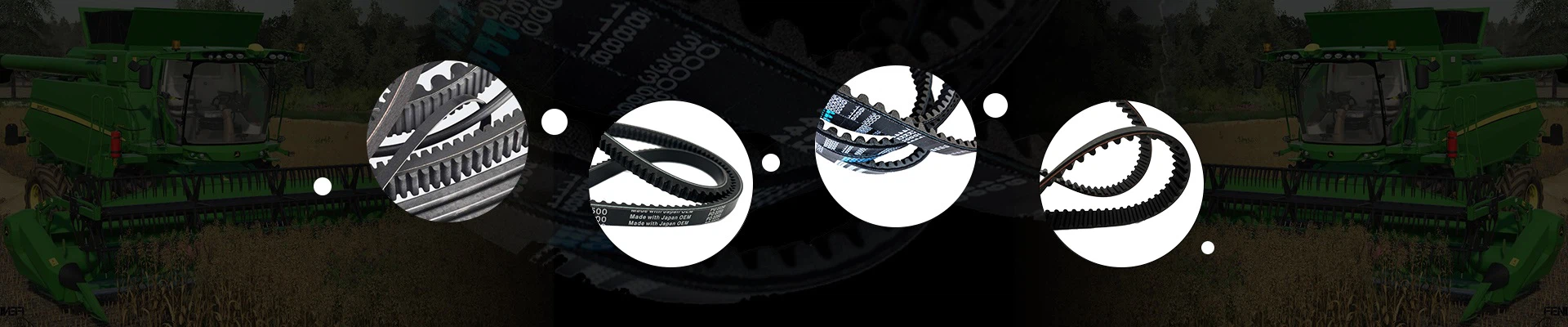
HNBR (hydrogenated nitrile rubber) is used in automotive timing belts and, thanks to its unique molecular structure, offers several key benefits, including:

Heat resistance: The hydrogenated modification of HNBR gives it excellent high-temperature performance, making it suitable for the hot environment of an engine compartment. It resists degradation under prolonged high temperatures, continuously protecting the timing belt from heat damage and maintaining stable performance in hot conditions.
Chemical resistance: HNBR's molecular structure forms a dense protective barrier, not just on the surface but throughout the polymer matrix. This effectively resists corrosion from various automotive oils and chemical liquids, greatly enhancing the belt's durability in complex engine chemical environments.
Wear resistance, durability, and fatigue resistance: Thanks to its unique molecular interactions, HNBR polymer chains efficiently absorb and redistribute mechanical stress. This helps the belt resist wear, scratching, and fatigue deformation, keeping its structure intact under continuous mechanical forces in the engine.
Low-temperature flexibility: The HNBR polymer maintains good adaptability to different environments, staying soft and flexible in cold conditions. This ensures the timing belt works properly even in low-temperature conditions.
High tensile strength: Strong intermolecular forces stabilize the HNBR polymer chain structure, giving the material excellent tensile strength. It can handle the continuous mechanical loads and stress of the engine timing system, meeting high-frequency operational demands.
Excellent rebound elasticity: HNBR has outstanding shape recovery abilities, absorbing impact energy during operation and releasing it in a controlled way. It quickly returns to its original shape, effectively cushioning and reducing vibration and shocks in the timing system for smoother, more reliable engine operation.
Long service life: With precise material design and stable molecular characteristics, HNBR timing belts withstand high-frequency, continuous engine cycles with minimal wear, extending product life and reducing downtime and maintenance costs.
Noise and vibration reduction: By optimizing polymer molecular interactions, HNBR efficiently dissipates vibration energy, reducing noise, vibration, and sound roughness in the timing system, lowering operational noise, and significantly enhancing the overall driving experience.