
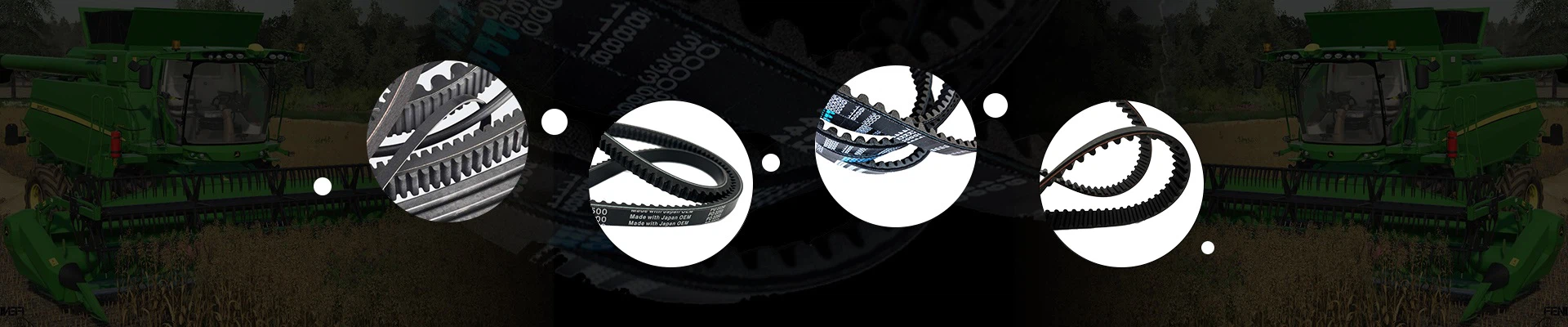
Fabric-wrapped outer layer and raw-edge cogged geometry

The core structural difference between wrapped V-belts and cogged V-belts lies in their external design. Wrapped V-belts use a continuous fabric cover-usually cotton or polyester-protecting the rubber core from wear, moisture, and contaminants. This protective layer also minimizes surface wear on the pulley, making wrapped belts ideal for dirty or harsh industrial environments. In contrast, cogged V-belts have a raw-edge design: the sides expose the rubber, and the inner surface has precisely cut transverse notches. Removing the fabric cover reduces rigidity and friction, which significantly boosts flexibility-especially around smaller pulleys. These notches create airflow channels during operation, further improving heat management. For example, cogged belts can bend around pulleys with a radius about 30% smaller than an equivalent wrapped belt while still maintaining grip and integrity.
Trapezoidal profile integrity and increased flexibility from side notches
Maintaining a precise trapezoidal cross-section is crucial for properly wedging into the pulley and transmitting torque reliably. Wrapped belts hold this shape well-the fabric cover resists side deformation, ensuring stable contact pressure and consistent tension under high loads. However, this rigidity increases bending resistance, causing energy loss and heat buildup. Cogged belts intentionally compromise geometric stiffness with side notches, acting like a series of tiny hinges. This lets the belt wrap smoothly around small-radius pulleys without overstressing the cords. The resulting reduction in bending energy loss can often improve drive efficiency by 3–5% over wrapped designs. Engineers choose based on priorities: use wrapped belts when profile accuracy and environmental protection are critical; use cogged belts when space constraints, high speed, or heat management require more flexibility.