
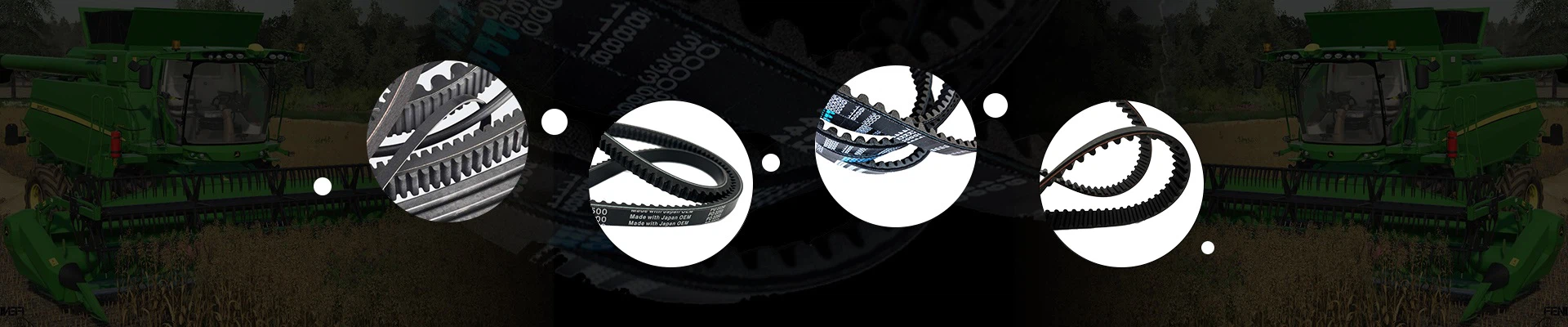
V-belts are widely used in agricultural machinery. Standard V-belts have a trapezoidal cross-section, with no joints in a full loop. They come in seven types: O, A, B, C, D, E, and F, with the cross-sectional area gradually increasing from type O to F. Choosing the right V-belt model depends on the power transmitted and belt speed, which involves quite a bit of know-how.


1. Pick the Right Model: The belt type you choose should match the recommended V-belt. Otherwise, the belt may not fit properly in the pulley grooves. When replacing a V-belt, it's best to bring the old one to the farm machinery store to avoid picking the wrong model.
2. Correct Installation: Before installation, if the distance between two shafts can be adjusted, shorten it first, install the belt, and then adjust to the required distance. If the shaft distance is fixed, you can loop one V-belt into the groove and then rotate the other pulley to slip the belt on; use the same method for a full set of belts. Never use tools to force the belt on, as this can stretch it or make it too loose or tight.
3. Prevent Misalignment: When installing pulleys, the centers of both top pulleys must align. Otherwise, the belt will work unevenly, wear quickly, and reduce the belt's lifespan.
4. Proper Tension: The belt tension must be regularly checked and adjusted to meet requirements. A belt that's too loose can slip, wear faster, and even fail to transmit power. A belt that's too tight can stretch or deform, damage components, and put extra stress on the engine and clutch bearings, which also accelerates belt wear. Correct checking: press down on the middle of each belt with about 2 kg of force; a 20–30 mm deflection is ideal. Adjust if necessary.
5. Don't Mix Old and New: When changing two or more belts, use those of the specified type and ensure each belt in a set has the same tension. Avoid mixing old and new belts or using fewer belts than required, as this creates uneven stress, reduces power transmission, and shortens belt life.
6. Keep Clean: Prevent oil, mud, and water from getting on the V-belt. Avoid contact with acidic or alkaline substances to prevent slipping and early damage.
7. Routine Maintenance: Operators should follow correct usage practices and the technical requirements in the user manual, avoid sudden starts and stops, and prevent frequent overloads. When machinery is not in use for a long time, remove belts for separate storage.


If you're looking to buy harvester V-belts, you can check the product of Agricultural Harvester V Belts page to choose, or contact us directly for detailed model information.