
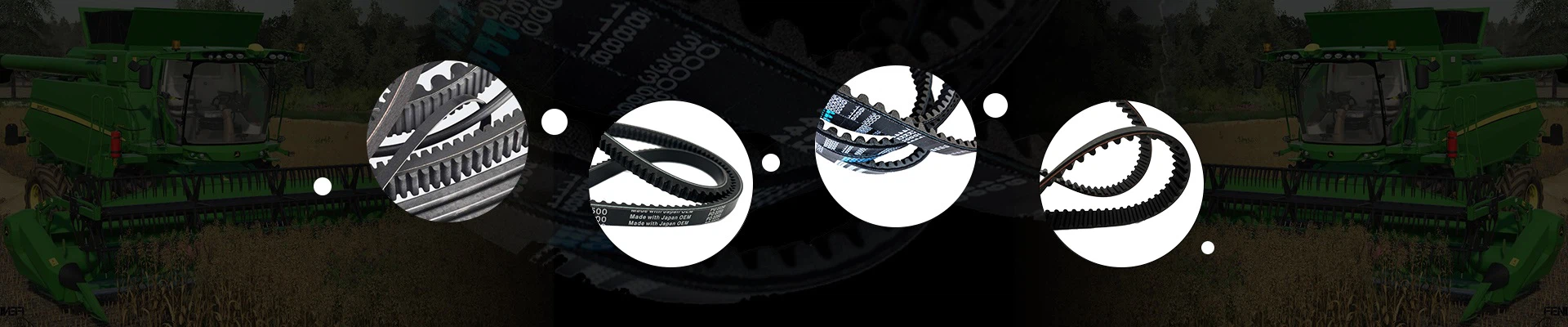
There are many factors to consider when choosing the right agricultural rubber track. Here are some of the main steps and suggestions:
1. Determine the type and weight of the machine:
Choose the appropriate rubber track shoe according to the type of agricultural machinery (such as tractors, harvesters, bulldozers, etc.) and weight. Different types of rubber track shoes are suitable for different types of machinery and working environments.
2. Consider the drive mode:
The drive mode of the rubber track (such as mechanical drive, hydraulic drive, etc.) will affect its performance and service life. When choosing, make sure that the rubber track matches the drive mode.
3. Evaluate the terrain of the work site:
Consider the terrain of the work site (such as flat, rugged, muddy, etc.) and choose the appropriate rubber track shoe to ensure traction performance and stability under various terrain conditions.
4. Check the size and specifications of the rubber track shoe:
Make sure the size and specifications of the rubber track shoe are compatible with the machinery to avoid inconvenience or damage due to size mismatch.
5. Choose the right pattern type:
Rubber tracks with straight and side-stretched spacing patterns have better traction performance. The non-slip performance mainly depends on the driving wheel diameter, wheel configuration and track guide length. The torsional stiffness, lateral rigidity, longitudinal compliance, pitch and flange height of the rubber track also have an important influence on the non-slip performance.
6. Consider durability and wear resistance:
The durability of the rubber track is manifested in the ability to resist wear, cutting, puncture, cracking and fragmentation. When selecting, pay attention to the material and manufacturing process of the rubber track to ensure that it has sufficient durability and wear resistance.
7. Correct installation and maintenance:
When installing the rubber track plate, follow the requirements of the machinery manufacturer to ensure that the connection between the rubber track plate and the machinery is tight and stable. Regularly perform maintenance and inspection, and replace the severely worn rubber track plate in time to ensure its normal use and extend its service life.
Through the above steps and suggestions, you can choose an agricultural rubber track that suits your machinery and working environment, thereby improving agricultural production efficiency and equipment reliability.