
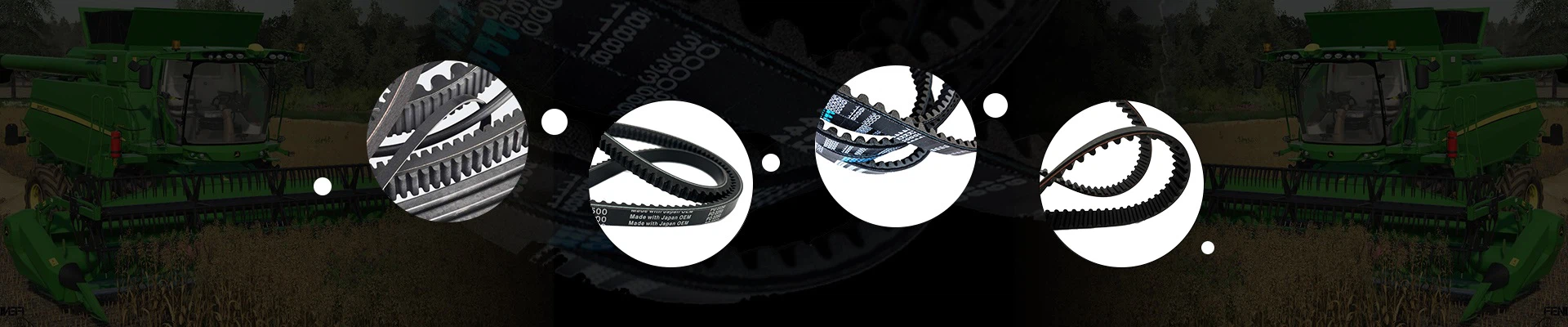
Common types of engine belts include V-belts, multi-wedge belts, and synchronous belts.
Both V-belts and multi-wedge belts consist of three parts: top fabric, tension line, and bottom rubber. The multi-wedge belt is essentially several micro V-belts combined; it is wider and thinner, providing greater flexibility around smaller driving wheels for power transmission in complex systems.
Synchronous belts are made of top rubber with fiber reinforcement, a strong glass fiber tension line, and a bottom layer featuring precision-molded teeth. Because they mesh with gears, synchronous belts typically do not slip.
Currently, multi-wedge belts are widely used in truck engines as they can drive two or three accessories simultaneously while working with automatic tensioners for self-adjustment. In contrast, V-belts require regular adjustment using an angle device to prevent slipping.