
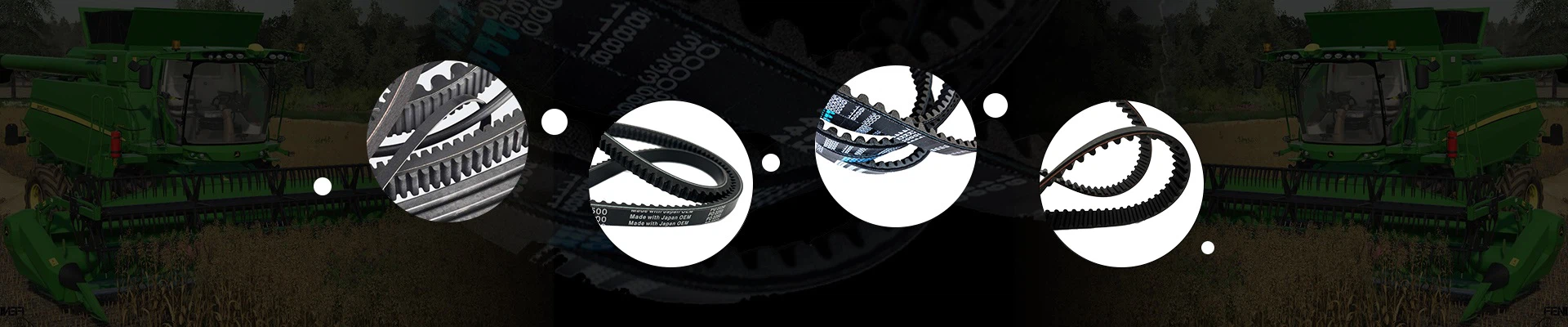
Double sided toothed synchronous belts are mainly used for double-sided transmission, with synchronous, simultaneous, and dual efficiency characteristics.
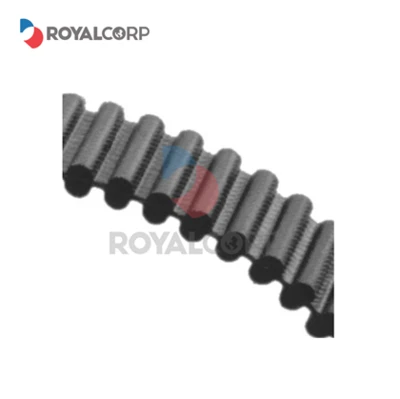
Introduction
1. The pitch and tooth profile of a double-sided synchronous belt are equivalent to those of a single-sided synchronous belt.
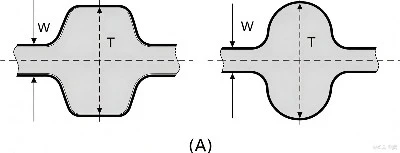
2. According to the toothed non fabric, it can be divided into two standard types:
The DA type double-sided synchronous belt has teeth arranged symmetrically on both sides. As shown in Figure (A)
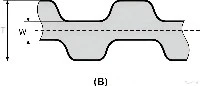
DB type double-sided synchronous belt, with teeth arranged in a staggered position on both sides. As shown in Figure (B)
Classification
According to its main materials, there are two types: chloroprene rubber double-sided toothed synchronous belt and polyurethane double-sided toothed synchronous belt.
According to its tooth profile characteristics, it can be divided into trapezoidal double-sided synchronous belt and circular double-sided synchronous belt.
There are mainly models available: D-XL,D-L,D-,HD-XH,D-XXH,D-T2.5,D-T5,D-T10,D-T20,D-AT10,HTD.DA-3M,HTD.DA-5M,HTD.DA-8MHTD,DA-14MHTD,DA-S8M
R&D (Research and Development)
As early as the early 1990s, the concept of double-sided toothed synchronous belts had gradually taken shape. At that time, both in terms of design and technical conditions, there were not enough conditions to develop double-sided teeth, but some customers in special fields had already proposed the idea of using such synchronous belts. At that time, double-sided toothed synchronous belts had already begun to emerge internationally, but relevant technical information and data could not be collected.
The earliest prototype of double-sided synchronous belt was the use of grinding technology to process double-sided teeth, that is, on the basis of thickening the belt back of the original synchronous belt product, an approximate tooth shape was polished with a forming grinding wheel. However, from the user's usage status and feedback, there are many defects, such as short lifespan, lack of wear resistance, severe tooth peeling, poor meshing, and so on.
After the establishment of the Transmission Belt Innovation Center in 1998, with the strong cooperation and support of relevant scientific research units, domestic experts visited and collected a large amount of foreign transmission belt related information. After visiting several senior transmission belt experts, they solved the problems of the forming process, vulcanization process, and related supporting facilities of double-sided toothed synchronous belts. The product has been inspected by the Chemical Industry Tape Quality Supervision and Inspection Center, and all indicators meet the standard requirements. It has been used by users and has received good feedback. In December 2003, the double-sided toothed synchronous belt passed the Ningbo municipal new product appraisal.
Application
Double sided toothed synchronous belts are widely recognized and applied in industries such as machinery, textiles, precision instruments and meters, petrochemicals, and communication cables due to their lightweight structure, slip free meshing transmission, and low noise.
It not only combines the advantages of gear transmission, chain transmission, and belt transmission, overcomes the disadvantages of other transmission belts such as slipping and elongation, and forms a unique transmission mode, but also deeply rooted in people's hearts with many advantages such as constant speed ratio, large speed range, compact structure, multi axis transmission in farms, oil resistance, moisture resistance, and no need for lubrication.
The successful development of double-sided toothed synchronous belts demonstrates its excellence in areas that require the use of a single belt for transmission in opposite directions, require particularly compact installation positions, or require high transmission requirements such as linkage between main and auxiliary drives; Super strong bending performance, ultra-high tensile strength, precise meshing, low signal-to-noise ratio, and so on.