
* Why buy a belt-driven bike, or convert your bike to belt drive?
1. Less maintenance – Belts don't need frequent lubrication, won't rust, and if they get dirty you can just hose them down.
2. Durability – Belts wear slowly and evenly, lasting at least twice as long as chains. Belts also handle the torque of e-bike motors better, which extends lifespan.
3. Clean – No need for lubricants, so no worrying about rolling up your pants for work. And no getting your hands dirty while fiddling with the belt.
4. Smooth and responsive – No belt stretch, so you feel the power transferred directly with every pedal stroke. It feels like gliding.
5. Lighter – A belt drive weighs about half as much as a chain drive. The belt itself is about 25% of a chain's weight, and the sprockets are just a little heavier.
6. Quiet – Belt drives are so quiet you almost forget they're there.
* What are the drawbacks of a belt drive?
Belts aren't suitable for derailleur-based gear systems. If you want multiple gears, you'll need an internal gear hub or gearbox.
* How long do split belts last?
Belts last at least twice as long as chains, but depending on care and riding style, they often last four times as long. Some riders have gone up to 20,000 miles on a single belt drive system. E-bike wear is shorter, but still more durable than chains on e-bikes.
* Do you run like most belt systems at high tension?
No. Thanks to our fully optimized sprocket tooth profiles, we can run at lower tension, making installation super easy.
* How do you keep the belt aligned?
Keeping the chain perfectly aligned during kit installation is crucial to secure the belt. The guide flanges on split belts also prevent the belt from slipping off the sprocket. Some rear sprockets don't have guide flanges, so a slight (~2mm) drift is normal.
* What are these belts made of?
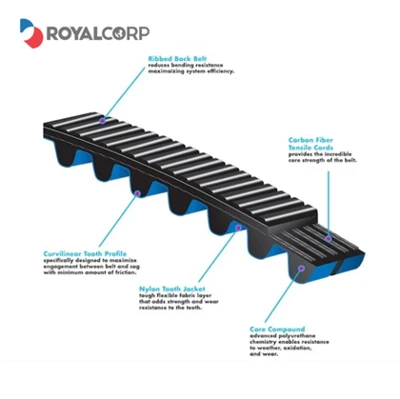
We use carbon fiber reinforced nitrile rubber belts, which are stronger than most bike belts out there.