
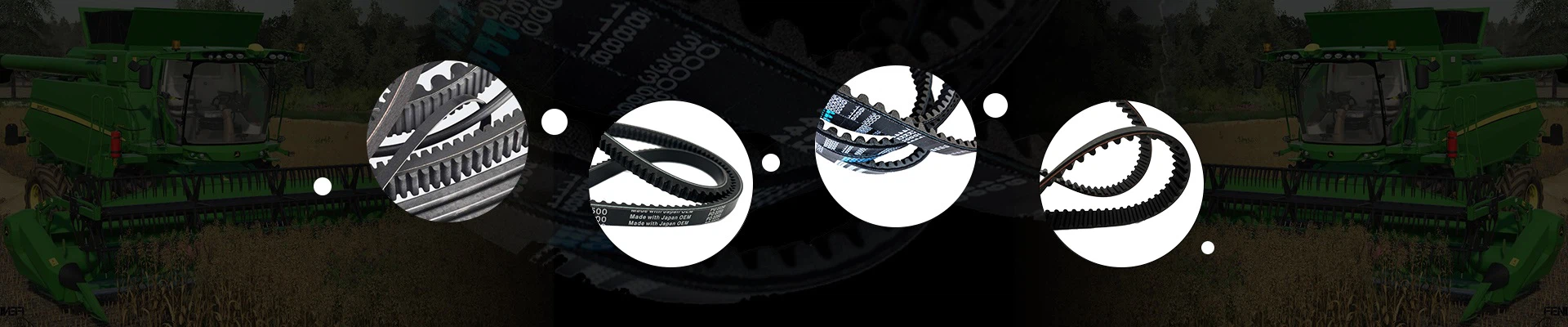
When you're choosing a V-belt, there are a few things you should think about:
Workload and transmission power: You need to pick a right V-belt based on the transmission power and workload of your equipment. The more transmission power there is, the larger the cross-sectional area of the V-belt should be. That way, it can make sure there's enough torque being transferred.
Speed: If the equipment runs at high speeds, narrow V-belts are better. 'Cause narrow V-belts can give you better transmission efficiency at high speeds. The linear speed of narrow V-belts is usually above 15m/s.
Environmental conditions: If the equipment works in a hot, humid or corrosive place, you should choose V-belt materials that can handle high temperatures, oil or corrosion. For example, normal V-belts are good for general mechanical transmission. But in special environments, you might need to use special V-belt materials.
Ease of installation and maintenance: Choosing a V-belt that's easy to install and maintain can cut down the downtime. For instance, normal V-belts are pretty simple to install and replace. They're suitable for equipment that needs maintenance often.
